

Psychiatry traditionally deals with the diagnosis and treatment of mental illnesses and disorders. Those violations of a person’s mental activity that are usually expressed in thoughts, feelings, emotions, actions and behaviour are studied. These violations may be obvious, pronounced, and may not be so obvious as to speak of “abnormal.” Unbalanced people are not always mentally healthy.
Human personality as a changing system
The line where pathology begins beyond the norm is somewhat blurred and not yet clearly defined in psychiatry or psychology. Therefore, it is difficult to definitively define and evaluate mental illness. If there are signs of a mental disorder in women, they can be similar to men. Clear gender differences in the nature of the manifestation of mental illness are sometimes difficult to see. In any case, with clearly expressed mental disorders. But the level of prevalence may vary depending on gender. In men, the signs of mental disorders are not without a source but are expressed with less force.
For example, if a person believes that he is Napoleon or has superpowers or if he has symptoms for no reason such as acute depression, or pain starts or he despairs over very minor everyday problems, then we know that he has signs of mental illness, which Can be assumed. There may also be perverse desires, or his actions will be clearly different from normal. Manifestations of painful conditions and mentality are very different. But the common thing is that, first of all, a person’s personality, his perception of the world change.
Personality is a combination of the mental and spiritual qualities of a person, his way of thinking, his response to changes, and the Environment of their character. Personality Traits Different people have physical, similar differences – nose shape, lips, eye colour, height, etc. That is, a person’s privacy has the same meaning as physical privacy.
We can identify a person by expressing personality traits. Personality traits do not exist in isolation from each other. They are closely related both in their function and nature of expression. That is, all our organs, tissues, muscles, and bones form a body shell, and they are organized into a kind of integrated system.
Just like an aged or affected body undergoes external factors and changes, personality does not stay the same, it grows and changes. Personality changes can be physical, normal (especially with age) and pathological. Personality changes (normal) with age occur gradually under the influence of external and internal factors. A person’s mental image also changes gradually. At the same time, the qualities of the personality change so that the unity and integrity of the personality are not violated.
What happens when there is a sudden change in personality?
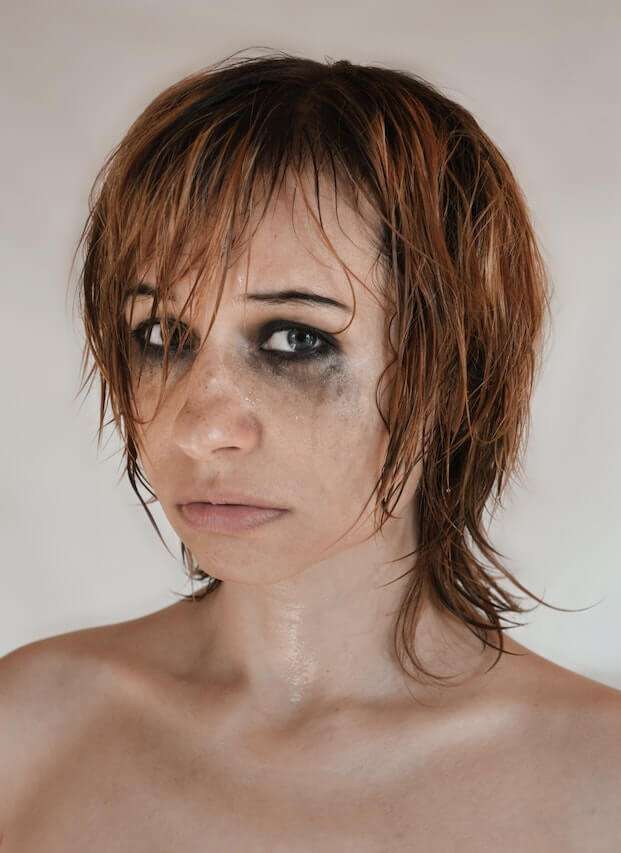
Sometimes, a person can change dramatically (or at least, it will appear to others). Familiar people suddenly became humble and boastful, very harshly judgmental, calm, balanced and aggressive and quick to anger. From detailed to crude, and superficial. It is difficult to avoid such changes. The harmony of personality is already broken. Such changes are already clearly pathological; they are deviations of the mood. It is clear that mental illness can cause such changes. Doctors and psychologists talk about this. In fact, mental patients often behave inappropriately in situations. Yes, over time it becomes clear to others.
Factors that contribute to the occurrence and development of mental illness:
- Traumatic head and brain injuries. At the same time, mental activity changes dramatically, obviously not on the better side. Sometimes it stops completely when a person falls into an unconscious state.
- Organic diseases, congenital pathology of the brain. In this case, both individual mental qualities and the overall functioning of the human psyche as a whole can be violated or “fall”.
- General infectious diseases (typhoid, septicemia or blood poisoning, meningitis, encephalitis, etc.). They can be called irreversible differences in psychology.
- Poisoning of the body under the influence of alcohol, drugs, gases, drugs, household chemicals (such as glue), and poisonous plants. These substances can cause strong changes in mood and cause disturbances in the central nervous system (CNS).
- Mental stress, mental trauma. In this case, signs of mental abnormalities may be temporary.
- The burdened generation. If a person has a history of close relatives with chronic mental illness, the likelihood of such illness among subsequent generations increases (this fact is sometimes disputed).
There may be other reasons for the above factors. There may be many of them, but not all of them are known in medicine and science. Usually, an obviously mentally unbalanced person can be instantly spotted even by city dwellers. However, the human psyche is perhaps the most poorly understood system in the human body. Therefore, its differences are not so weak for a clear and clear analysis.
Each case of pathological discrimination should be studied individually. A mental disorder or disease can be acquired or congenital. If they are acquired, it means that there has come a certain moment in a person’s life when the pathological qualities of the personality come to the fore. Unfortunately, it is impossible to find the moment of transition from the norm to pathology, and it is difficult to know when the first symptoms appear. Also, how to prevent this migration.
Where and when does “abnormality” begin?
Where beyond the line does mental illness immediately begin? If there was no obvious interference from outside the psyche (head injury, intoxication, illness, etc.), why did he do it anyway, from the point of view of both the sick person and his environment? Have an illness or mental disorder, even if not psychotic? What went wrong and when? Doctors still don’t answer these questions. One can only guess, studying history carefully, trying to find something that could at least make a difference.
When talking about innateness, it is assumed that the mental qualities of a person are never agreed upon. The individual was already born with a broken integrity of personality. Mental disorders in children and their symptoms represent a separate area for study. Children have their own psychological characteristics that differ from adults. It should be remembered that the signs of a mental disorder can be obvious and obvious, or they can appear gradually and randomly. Moreover, anatomical changes (in this case, they often mean changes in the brain, first) can be visible and obvious in diseases and mental disorders, but they seem to be undetectable. Or their differences are so subtle that they cannot be detected at a given level of medical development. That is, from a purely physiological point of view, there are no violations, but the person is mentally ill and needs treatment.
The pathological basis of mental illness should be considered primarily as a disorder of the central nervous system – a violation of the basic processes of higher nervous activity.
If we talk directly about the signs of mental disorders, we must take into account the peculiarities of the classification of mental illnesses. Classifications have undergone various changes during each historical period of the development of psychiatry. Over time, it became clear that there was a need for consistent diagnosis of the same patients by different psychiatrists, regardless of their theoretical orientation. Practical experiences, Even now this may be difficult to achieve, due to conceptual disagreement in understanding the essence of mental disorders and diseases.
Another difficulty is the existence of different national classifications of diseases. They can vary according to different criteria. From the point of view of the importance of reproduction at the moment.
Types of psychosis (according to the domestic classification), depending on the main causes that cause them:
- Intrinsic (under the influence of external factors) mental illness, but with the participation of external factors. These include schizophrenia, epilepsy, affective disorders, etc.
- External (under the influence of internal factors) mental illness, but with the participation of endogenous factors. These include somatogenic, infectious, traumatic diseases, etc.
- As well as diseases caused by developmental disorders, due to malfunctions or disruptions in the functioning of established body systems. This type of illness includes various personality disorders, mental disorders, etc.
- Psychology, these are mental illnesses, diseases with neurological symptoms.
It is worth considering that all classifications are not perfect and are open to criticism and improvement.